
 Historic Geopolitical Shock
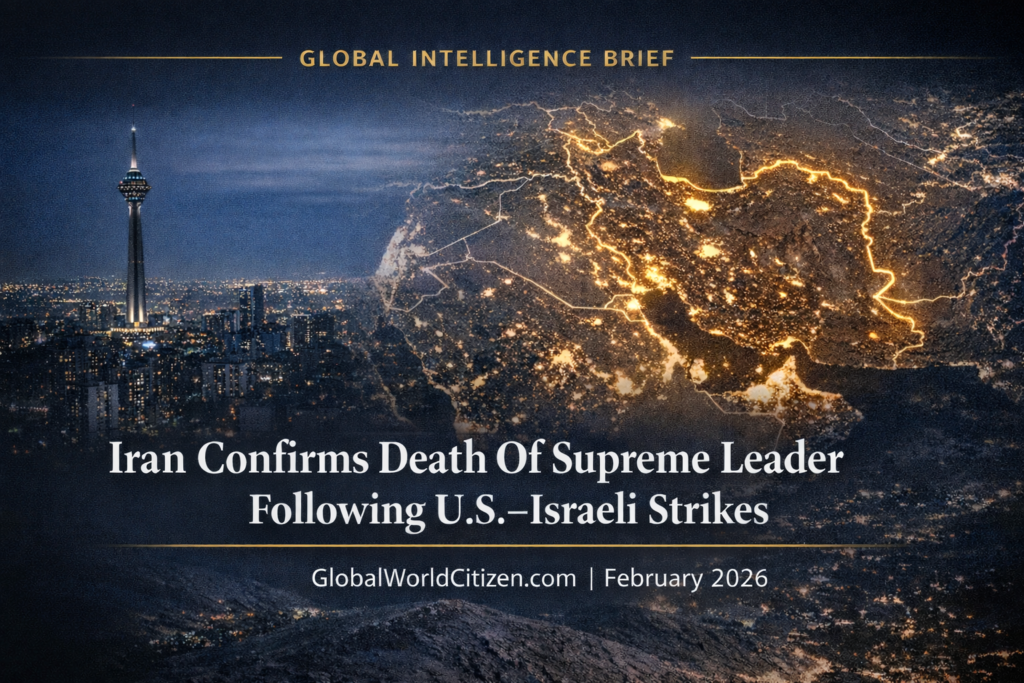
Iranian state media has officially confirmed that Supreme Leader Ayatollah Ali Khamenei was killed following coordinated U.S.–Israeli military strikes that began on February 28, 2026.
Iran’s government has declared:
 40 days of public mourning
 7 days of national holidays
 Emergency leadership arrangements
This marks one of the most consequential geopolitical events in modern Middle Eastern history.
 What Happened?
According to official U.S. military statements, an operation targeting Iranian military infrastructure began in the early hours of February 28.
Targets reportedly included:
 Islamic Revolutionary Guard Corps command facilities
 Air defense systems
 Missile and drone launch sites
 Military airfields
Israeli forces reportedly participated in large-scale coordinated strikes across multiple locations inside Iran.
Iranian state television later confirmed the death of Khamenei.
 Escalation Timeline
Within hours of the initial strikes:
• Iran launched retaliatory missile and drone attacks
• Multiple Gulf states reported airspace disruptions
• Major airports in the region experienced temporary closures
• Civilian casualties were reported inside Iran
The conflict rapidly expanded beyond a single targeted operation into a region-wide military confrontation.
 Leadership Transition Inside Iran
Iran’s constitution provides a mechanism for temporary leadership in the event of the Supreme Leader’s death.
An interim council has reportedly assumed responsibilities while the Assembly of Experts prepares to select a successor.
This transition process will determine:
 Internal stability
 Policy continuity
 Iran’s external posture
 Whether escalation continues or diplomacy resumes
 Global Reactions
The international response has been deeply divided.
 United States
U.S. officials framed the operation as a defensive measure aimed at neutralizing threats and preventing nuclear escalation.
 United Kingdom
British leadership urged immediate de-escalation and a return to diplomacy.
 Canada
Canada reaffirmed concerns regarding Iran’s regional role and nuclear ambitions while calling for civilian protection.
 Russia
Russia condemned the strikes as violations of international law.
 United Nations
The UN Secretary-General called for restraint and adherence to the UN Charter, warning of catastrophic regional consequences.
 Global Economic Shockwaves
Markets reacted immediately.
Oil prices surged on fears of disruption near the Strait of Hormuz — one of the most critical energy corridors in the world.
Potential consequences include:
 Oil price volatility
 Airline and shipping disruptions
 Energy supply instability
 Safe-haven asset movements Supply chain ripple effects
OPEC+ signaled possible production adjustments, but analysts caution that sustained conflict could override supply increases.
Aviation & Transport Disruptions
Major Middle Eastern hubs temporarily restricted operations.
Thousands of flights were delayed or rerouted.
Airspace closures created cascading global disruptions affecting:
• Passenger travel
• Cargo shipments
• Energy transport
• Insurance markets
Legal & Strategic Debate
The strikes have triggered intense global debate around:
 International law Right to self-defense War powers authority Precedent for targeting national leadership
Some leaders argue the action was necessary to prevent nuclear escalation.
Others warn that targeted leadership strikes risk setting a destabilizing global precedent.
 GWC Strategic Intelligence Analysis
This event creates three potential scenarios:
 Rapid Contained Conflict
Short-term escalation followed by urgent diplomatic negotiations.
 Prolonged Regional War
Sustained retaliation across Gulf states and proxy networks.
 Structural Middle East Realignment
Leadership change inside Iran triggers internal shifts and regional recalibration.
Global citizens must monitor:
 Nuclear facility status Iranian succession process Strait of Hormuz stability Oil & commodity pricing U.S. congressional response UN diplomatic engagement
The Global World Citizens Perspective
At GlobalWorldCitizen.com, we believe:
Sustainable peace requires:
• Strategic restraint
• Civilian protection
• Transparent diplomacy
• Global cooperation
Escalation cycles rarely produce lasting stability.
The world now stands at a fragile crossroads.
 Intelligence Status
Event Magnitude: Extreme
Regional Risk: High
Global Economic Sensitivity: Elevated
Diplomatic Window: Narrow
 Interactive Section (For GWC Readers)
We want to hear from Global World Citizens:
 Do you believe this will escalate into a prolonged conflict? Should international mediation begin immediately? How will energy markets respond long-term?
Comment below. Share responsibly. Stay informed.