
Published: March 2, 2026
 Editorial Team: Global World Citizens News Desk
 Source: GlobalWorldCitizen.com
 Category: Global Security | Geopolitics | Defense & Strategic Intelligence
Three American service members were killed during a military operation targeting Iran, the U.S. military confirmed Sunday, marking a significant escalation in the ongoing U.S.–Iran confrontation and intensifying concerns over regional stability in 2026. According to U.S. Central Command (CENTCOM), five additional service members were seriously wounded, while several others sustained minor injuries, including shrapnel wounds and concussions. Officials stated that major combat operations remain ongoing. The identities of the fallen troops have not yet been released as authorities work to notify next-of-kin, and operational details — including the precise timing and location of the incident — have not been publicly disclosed.
The escalation has had immediate regional consequences. Iranian retaliatory missile and drone strikes reportedly resulted in civilian casualties across multiple countries. In Israel, at least nine individuals were killed after a missile struck a synagogue in Beit Shemesh, according to local authorities. The United Arab Emirates confirmed three fatalities and reported intercepting hundreds of missiles and drones since the start of the campaign. Kuwait reported one death and at least 30 injuries. Both the UAE and Kuwait host U.S. military bases or American troops, underscoring the broader strategic implications of the unfolding crisis.
Despite the military developments, diplomatic engagement appears to remain under consideration. In an interview with ABC News, Iranian Foreign Minister Abbas Araghchi stated that Iran’s military capabilities remain intact and characterized the country’s actions as defensive. “We are defending ourselves and we have every legitimate right to defend ourselves,” he said. Meanwhile, in remarks to The Atlantic, Donald Trump indicated that further talks with Iran had been agreed upon, suggesting that discussions over a renewed nuclear agreement may continue in the coming days. The coexistence of active military operations and diplomatic overtures reflects the complexity of the current geopolitical landscape.
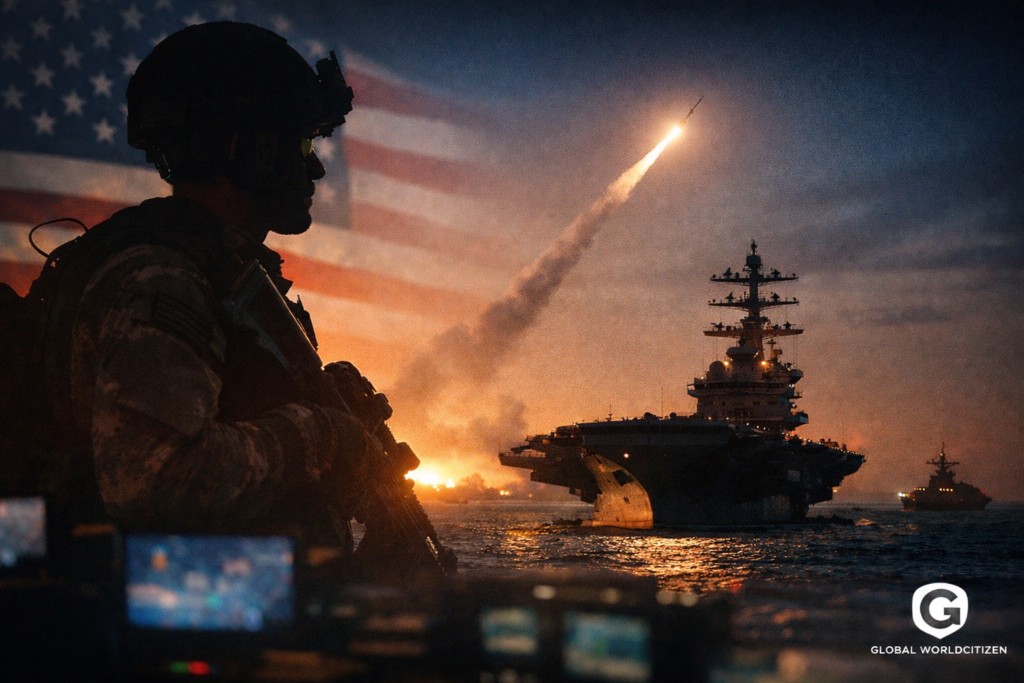
In a parallel naval development, U.S. Central Command confirmed that American forces struck and sank an Iranian Jamaran-class naval corvette near the southeastern Iranian port of Chabahar in the Gulf of Oman.
The vessel is reportedly sinking at the pier. U.S. officials also rejected Iranian claims that the aircraft carrier USS Abraham Lincoln had been targeted, stating that Iranian missiles did not approach the carrier. The Gulf of Oman remains a strategically critical maritime corridor for global energy transport and international shipping, making naval incidents in the area particularly consequential.
From a global perspective, the incident carries implications beyond immediate military considerations. Energy markets are closely monitoring developments amid concerns over oil price volatility and potential disruptions to shipping routes linked to the Strait of Hormuz. Financial markets may respond to heightened geopolitical risk, particularly within defense, energy, and commodities sectors. Additionally, uncertainty surrounding U.S.–Iran nuclear negotiations adds pressure to an already fragile regional balance.
At GlobalWorldCitizen.com, we approach global events through a strategic and interconnected lens. The deaths of U.S. troops and the widening scope of regional casualties underscore the delicate equilibrium between military deterrence and diplomatic resolution. As developments continue to unfold, the direction of this conflict — whether toward broader escalation or renewed negotiation — will shape not only regional stability but also global economic and security dynamics in 2026.
GlobalWorldCitizen.com will continue to provide verified updates, strategic analysis, and global intelligence insights for policymakers, investors, and global citizens navigating an increasingly interconnected world.